


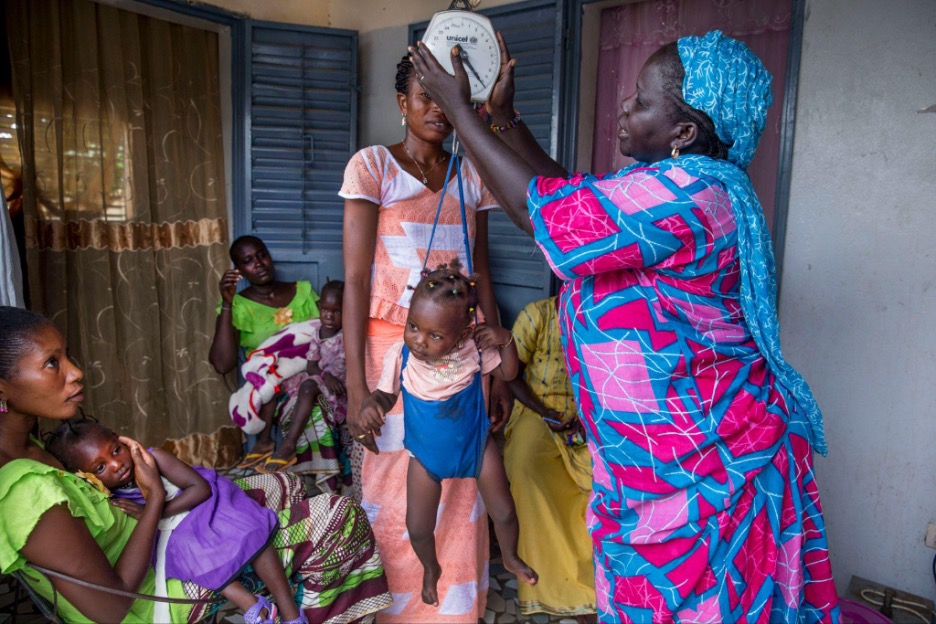
Indicateurs de planification familiale post-partum et post-avortement : Apprentissages du Nigeria, du Burkina Faso et du Rwanda
e 17 août, Knowledge SUCCESS et le FP2030 NWCA Hub ont organisé un webinaire sur les indicateurs de planification familiale post-partum et post-avortement (PPFP/PAFP) qui a promu les indicateurs recommandés et mis en lumière des exemples de mise en œuvre réussie par des experts au Rwanda, au Nigéria et au Burkina Faso.

El Avance De La Discapacidad En Ecuador Como Prioridad De La Cobertura Sanitaria Universal
En Ecuador, si bien ha habido importantes avances políticos que reconocen a las personas con discapacidad (PCD) como titulares de derechos, persisten muchas situaciones de exclusión debido a las condiciones de pobreza o pobreza extrema que afectan a muchas PCD, y el acceso real a la salud de las PCD sigue sin lograrse.
Advancing Disability In Ecuador As An Universal Health Coverage Priority
In Ecuador, while there have been significant policy advances that recognize persons with disabilities (PWD) as rights holders, many situations of exclusion persist due to conditions of poverty or extreme poverty that affect many PWD, and real access to health for PWD remains unachieved.

Beyond Humanitarian Settings: Young People’s Needs For Family Planning Remain Unmet in DRC
Gender inequality and gender-based violence (GBV) are serious concerns for refugees from the DRC. In the spring of 2022, the conflict in Eastern DRC escalated when the Mouvement du 23 Mars (M23) rebel military group engaged in fighting with the government in the North-Kivu province.

Spotlight on People-Planet Connection: Edith Ngunjiri on Blue Ventures
Blue Ventures started integrating health interventions, addressing a huge unmet need for family planning. We came to understand that we were addressing a health need which is part of a broader ecosystem consisting of conservation, health, livelihood, and other challenges.
Inside the FP Story’s Sixth Season Launches
Season 6 of Inside the FP Story highlights the importance of considering the larger sexual and reproductive health context when providing family planning and contraceptive services.

What Makes a Facility “Ready” to Provide Family Planning Services? Researchers in Bangladesh Explored Similarities and Differences Across Asia and Africa
Knowledge SUCCESS’ Brittany Goetsch chatted recently with Dr. Mohammad Mosiur Rahman, Professor, Department of Population Science and Human Resource Development, University of Rajshahit, the principal investigator (PI) of the research team, to learn how they used secondary data sources to explore the similarities and differences in facility readiness to provide FP services across 10 countries.

Impacts of the COVID-19 Pandemic on Family Planning Services in Gandaki Province, Nepal
A team of four faculty - Isha Karmacharya (lead), Santosh Khadka (co-lead), Laxmi Adhikari, and Maheswor Kafle - from the Central Institute of Science and Technology (CiST) College wanted to study the impact the COVID-19 pandemic had on FP commodities procurement, supply chain, and stock management in Gandaki province to determine if there were any variations

FP UHC Blog Series: Ensuring Equitable Access to Family Planning in India’s Health Care System
Adapted from the soon to be published article “How Enhanced Engagement with The Private Sector Can Expand Access to Family Planning and Bring the World Closer to Universal Health Coverage” developed by Adam Lewis and FP2030.
Advancing Funding Opportunities for Self-Care in West Africa
On August 10, 2022, the Knowledge SUCCESS project and PATH hosted a bilingual peer assist to address the issues and challenges identified by Senegal’s group of Self-Care Pioneers to better advance their progress in the field.