


Inside the FP Story Podcast: Fifth Season Launches
Season 5 of Inside the FP Story highlights the importance of using an intersectional approach in family planning and sexual and reproductive health programs.

The Journey Towards Gender Equality and Women’s Empowerment
Katosi Women Development Trust (KWDT) is a registered Ugandan non-governmental organization that is driven by its mission to enable women and girls in rural fishing communities to effectively engage in socioeconomic and political development for sustainable livelihoods. KWDT Coordinator Margaret Nakato shares how the implementation of a fishing project under the organization’s economic empowerment thematic area
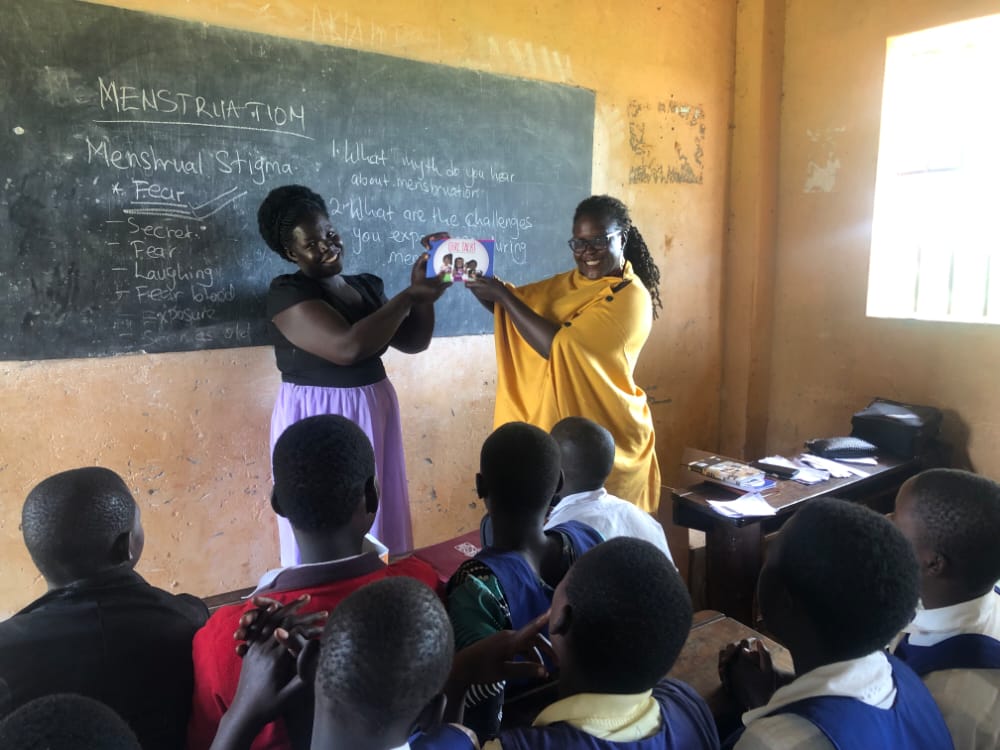
Empowering Girls Through Menstrual Hygiene Management: Wii Tuke Gender Initiative’s MVoice Campaign
Wii Tuke Gender Initiative is a women- and youth-led organization in Northern Uganda’s Lira District (in the Lango sub-region) that uses technology and culture to empower women and girls from structurally silenced communities.

Making Contraceptives Accessible to Adolescent Youth in Northern Uganda
Marie Stopes Uganda’s Gulu Light Outreach provides free mobile clinics that engage Northern Ugandan communities on reproductive health. Using peer-to-peer influence and outreach in markets and community centers, the team educates young people on contraceptives. It aims to spur family planning and support a culture that prioritizes the futures of its youth and the sustainability of
UHC and Family Planning: Financing Schemes, Innovations, and Integration
Our second conversation in this 3-part collaborative webinar series focused on financing schemes and innovations for UHC and the integration of family planning.

Five Things Every Youth Advocate Should Know
Working in PHE (Population, Health, and Environment) gives me a unique perspective on the realities of community development. A lot of the factors that hinder the realization of optimum human health are closely linked to changes in the environment. As such, PHE projects bring about improved health outcomes, improved environment indicators, and more youth participation in

FP/RH Champion Spotlight: Strong Enough Girls’ Empowerment Initiative (SEGEI)
SEGEI empowers adolescents and young women through education, mentorship, and comprehensive sexuality education. Its three main goals are to ignite—help its beneficiaries find and use their voices and talents to become their own advocates, nurture—SEGEI helps beneficiaries with academic, health, and professional attainment, and harness—tap into the talents of beneficiaries to promote community empowerment.

FP/RH Champion Spotlight: Likhaan Center for Women’s Health Inc.
Likhaan is a non-government, nonprofit organization established in 1995 to respond to the sexual and reproductive health needs of women experiencing poverty. It runs community-based health programs anchored on three strategies: community education and mobilization; provision of primary, integrated sexual, and reproductive health (SRH) care; and advocacy for rights-based and equitable health policies.
Social and Behavior Change for Family Planning Collection—Now Live!
Breakthrough ACTION + RESEARCH has launched a new resource collection and accompanying catalog. They showcase more than one hundred social and behavior change (SBC) for family planning (FP) resources for planners, designers, implementers, donors, and other users to inform innovative, evidence-based, and impactful interventions.

Recap: Responding to the SRHR Needs of Indigenous Women and Girls
Earlier this year, Communities, Alliances & Networks (CAAN) and The World Health Organization’s (WHO) IBP Network partnered on a series of seven webinars on advancing the SRHR of Indigenous women living with HIV. Each webinar featured rich discussions, highlighting national plans and the status of Indigenous women living with HIV and other sexually transmitted infections in each country.