


Increasing the Impact of Reproductive Health Programs
This piece summarizes a recent study by the USAID-funded Passages Project exploring social norms impacting the reproductive health of adolescent girls and young women in Burundi. We explore how the research findings can be applied in the design of reproductive health programs to identify and involve key influence groups that influence social norms.

Increasing the Impact of Reproductive Health Programs
This piece summarizes a recent study by the USAID-funded Passages Project exploring social norms impacting the reproductive health of adolescent girls and young women in Burundi. We explore how the research findings can be applied in the design of reproductive health programs to identify and involve key influence groups that influence social norms.

How to Start Your SMART Advocacy Journey
SMART Advocacy is a collaborative process that brings together advocates and allies from different backgrounds to create change and sustain progress. Read on for tips and tricks to tackle your own advocacy challenges.

Seven Lessons in Sustainability and Scalability for Digital Health Solutions
Recent updates to digital health case studies highlight ways programs have changed in the past decade, revealing insights on sustainability and scalability.
Scale-Up Community of Practice in Transition
In nearly eight years at the helm of the Systematic Approaches to Scale-Up Community of Practice (COP), the Evidence to Action (E2A) Project grew the community from several committed partners in 2012 to nearly 1,200 members worldwide today. With sustained engagement from the U.S. Agency for International Development (USAID), core technical partners and founding members, ExpandNet,

Can Social Listening and Social Media Monitoring Benefit Your SBC Activities?
Social media has increasingly become one of the most popular places for individuals to express their views and engage in conversations about what they see, hear, and believe. There are currently 3.4 billion social media users, a figure projected to increase to 4.4 billion by 2025. This growing popularity means that social media can also be

8 Must-See Insights for First-Time Parent Programs
Queen Esther is proud to lead this small peer group, part of a core package of activities for young first-time parents (FTPs) developed by the Evidence to Action (E2A) Project. E2A’s comprehensive first-time parent program model, implemented with dedicated country partners and funding from USAID, is effectively improving health and gender outcomes for this critical population

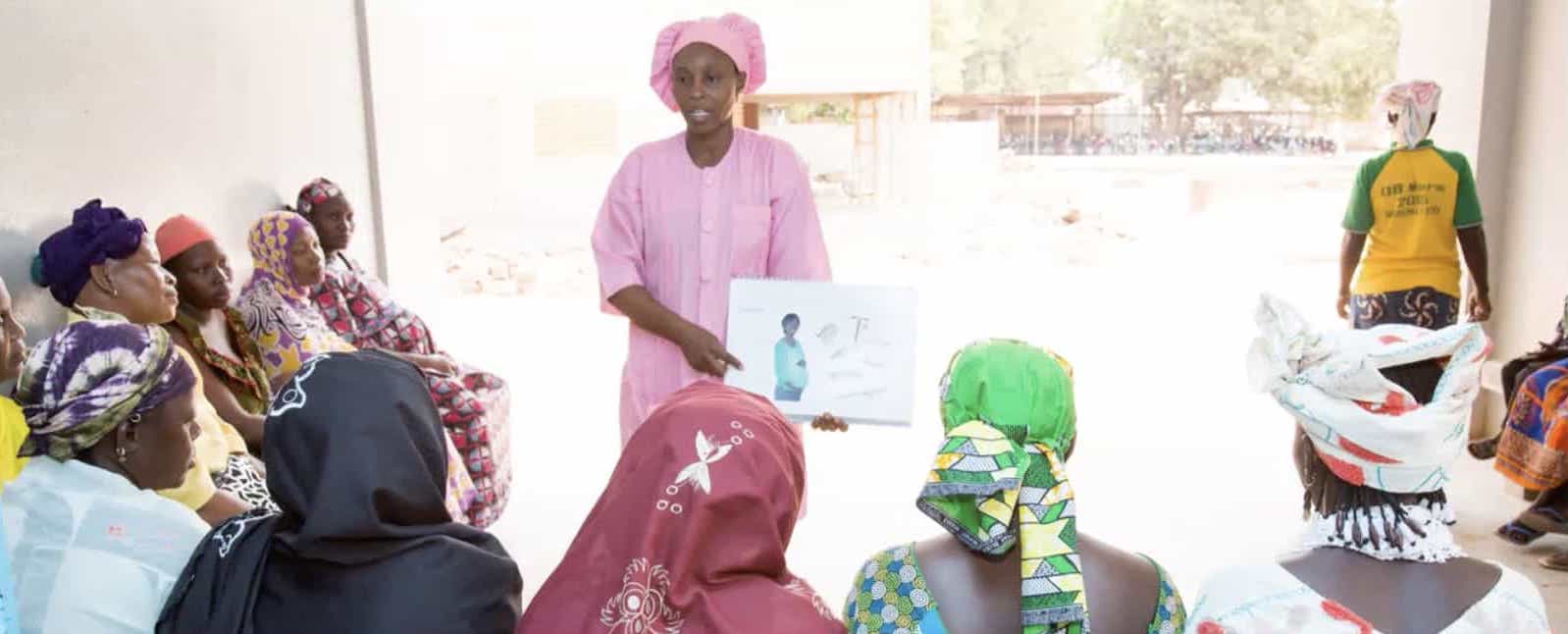
Is Better Measurement the Key to Increased Investment in Social and Behavior Change for Voluntary Family Planning in Francophone West Africa?
Social and behavior change (SBC) approaches can increase the use of modern contraceptives by addressing the attitudes and social norms that influence demand. However, they often do not receive attention, partly because many practitioners are not effectively measuring their SBC efforts. Breakthrough ACTION interviewed voluntary family planning stakeholders in West Africa to learn why.