


Why Knowledge Management Matters for Family Planning Costed Implementation Plans
Findings from a recent assessment conducted by Knowledge SUCCESS of KM integration into Costed Implementation Plans (CIPs) in five West African countries—Burkina Faso, Côte d’Ivoire, Niger, Senegal, and Togo—revealed the multifaceted ways KM contributes to stronger FP/RH outcomes and more efficient use of limited resources including:
- Coordinating stakeholders and their activities to avoid duplication of effort
- Facilitating collaboration and the sharing of information within and between organizations to maximize effective programs
- Taking stock of what’s working and identifying solutions to address challenges
- Documenting the “what” and the “how” of programs to ensure the FP/RH field is learning as they are doing and evolving as needs change and new challenges arise.
For example, an FP/RH stakeholder from Côte d’Ivoire explained KM’s critical role in achieving the Sustainable Development Goals (SDGs) by helping programs learn from their experiences and find solutions to fill gaps in knowledge:
… What do we know, what do we need to improve and what are the challenges? And then find solutions, because we won’t be able to achieve all the SRHR [sexual and reproductive health and rights] objectives we’ve set for the SDGs, even by 2030.
Another stakeholder from Burkina Faso emphasized the importance of KM in facilitating this knowledge sharing and learning across programs, organizations, and even sectors:
How do we capitalize on what we’ve learned? And how do we use this in other programs? … knowledge management is a process that actually enables capitalized results to be used. One program’s current results, therefore, can have an impact on the other program. … it’s not even a question of health anymore, it’s a question of development …
Common FP/RH Program Challenges and KM Solutions
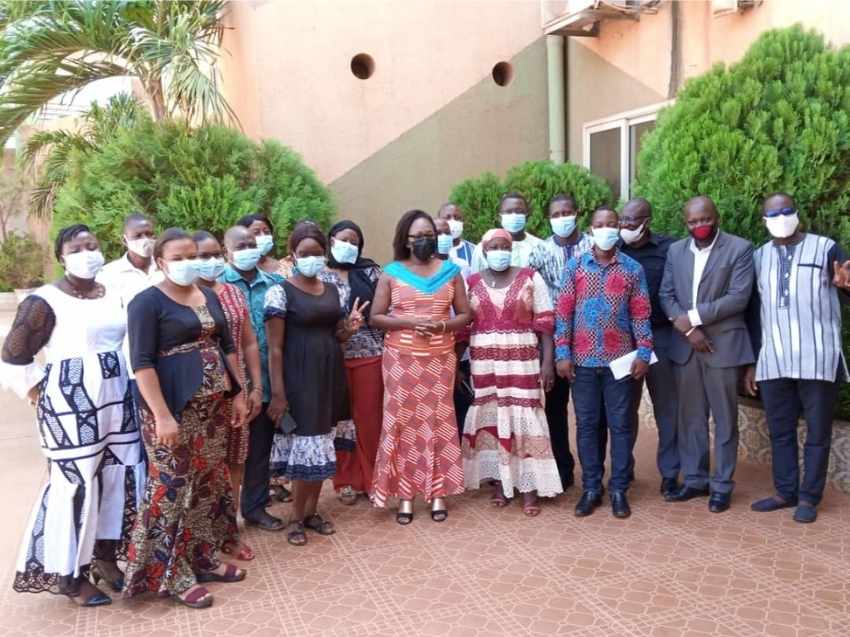
Between 2021 and 2023, Knowledge SUCCESS collaborated with West Africa Breakthrough ACTION (WABA), Health Policy Plus (HP+), and other CIP working group members to integrate KM into five West African countries’ family planning CIPs. CIPs are multi-year actionable roadmaps, referred to in French as plan d’action national budgétisé de planification familiale (budgeted national family planning action plans), designed to support governments in achieving their FP/RH goals.
As these stakeholders began to formulate their roadmaps, they recognized that KM could help solve certain barriers to advancing FP/RH outcomes. Some of these barriers included lack of awareness among program stakeholders of FP/RH legislative policies and regulations due to weak availability, dissemination, and promotion; duplication of effort and wasted resources stemming from insufficient coordination between FP/RH programs and donors; and challenges with scaling up best practices because platforms weren’t readily available to share information with each other.
In the five countries, the CIP working groups intentionally included KM initiatives in their CIPs—alongside social and behavior change (SBC), supply chain, service delivery, enabling environment, and monitoring and evaluation interventions—to help solve these problems. Common KM initiatives included in the CIPs, according to our analysis of the five countries’ CIPs, consisted of:
- Developing a functional platform to share information, accessible to all stakeholders
- Forming thematic groups on FP/RH topics or revitalizing FP/RH committees
- Documenting experiences, best practices, and lessons learned
- Developing and disseminating feedback bulletins
- Organizing national meetings to share program lessons and evidence
Of course, we know it’s common to experience challenges with executing a plan, and challenges with executing CIPs—however relevant and useful they are—are no exception. Although some countries were still in the final stages of finalizing their CIP or had only recently begun to execute their CIP at the time of our assessment, some of the stakeholders did point to the implementation of specific KM activities that were included in their CIP. For example:
- In Senegal, the Ministry of Health’s Department of Maternal and Child Health recently hired a KM specialist in its goal to institutionalize knowledge management. The KM specialist has already conducted an information audit and is planning to produce a KM strategy in collaboration with all the key partners, as well as KM training for all department staff.
- In Niger, stakeholders were currently establishing a community of practice focused on youth and climate change to share experiences and approaches across programs, and partners document interventions and regularly write and publish articles to help promote best practices.
- In Côte d’Ivoire, respondents were aware that country stakeholders were coordinating their activities for a World Contraception Day event.
How to Integrate KM Into National Strategies and Action Plans
CIPs and other types of national strategies or action plans are important planning tools because they help countries identify the best ways to achieve their family planning or other health goals and objectives. Integrating KM interventions into CIPs and other national strategies is crucial to avoid inefficiencies and duplication of effort in programs, better coordinate resources across stakeholders and institutions, and ensure programs are learning as they are doing—and applying that learning for more effective programming and better FP/RH outcomes.
Based on the findings of our assessment, we propose the following recommendations to facilitate the integration of KM into country CIPs and strategies:
Identify potential KM champions who can advocate for the inclusion of KM in the CIP to help achieve a country’s FP/RH objectives.
Replicate and reinforce Knowledge SUCCESS’s interactive KM workshop model to help country stakeholders better understand KM’s role in FP/RH programs. In all five West African countries, CIP working group members who participated in the KM workshops said the interactive workshop activities helped them identify the country’s primary KM challenges and select suitable KM strategies and activities while building on the KM activities that the country was already doing.
Support countries during the execution of CIPs, particularly related to capacity strengthening and resource mobilization for KM to help ensure the CIP approach translates into sustainable impact.
As donor government funding for family planning drops or, at best, remains stagnant, it becomes even more important for FP/RH programs to use these finite resources more efficiently. KM benefits programs and organizations by helping them make better and faster decisions, solve problems, avoid redundancies and repeating costly mistakes, communicate best practices and lessons learned widely and quickly, and stimulate innovation and growth. Integrating KM into national strategy documents and plans is a smart investment for donors, governments, and organizations alike to achieve their health and development goals.
Learn more about the assessment: