



Addressing Young People’s SRH Needs in Humanitarian Settings
On July 22, 2021, Knowledge SUCCESS and FP2030 hosted the third session in the fourth module of the Connecting Conversations series: Celebrating the Diversity of Young People, Finding New Opportunities to Address Challenges, Building New Partnerships. This particular session focused on how to ensure that young people’s SRH needs are met in settings in which health

The Pitch Announces Knowledge Innovation Winners
Knowledge SUCCESS last week announced four winners from a field of 80 contestants in "The Pitch," a global competition to find and fund creative knowledge management ideas for family planning.
Récapitulatif: Mise en œuvre d’une approche adaptée aux adolescents
Le 8 avril, Knowledge SUCCESS & FP2030 ont organisé la troisième session de la troisième série de conversations de la série Connecting Conversations, “ À quoi ressemble la mise en œuvre d'une approche adaptée aux adolescents ?” Cette session s'est concentrée sur les différences entre la mise en œuvre d'une approche systémique par rapport aux approches

What Works in Family Planning and Reproductive Health, Part 1: Male Engagement
Today, Knowledge SUCCESS is pleased to announce the first in a series that documents “What Works in Family Planning and Reproductive Health.” The new series will present, in depth, essential elements of impactful programs The series uses innovative design to address some of the barriers that traditionally discourage people from creating or using documents that share

The Epidemic Within an Epidemic
In October 2020, staff at the Johns Hopkins Center for Communication Programs (CCP) noticed a change in the search patterns bringing people to the Knowledge SUCCESS website. “What is the advocacy message of family planning” had moved up the charts, with a nearly 900% increase over the previous month. 99% of those queries originated in the
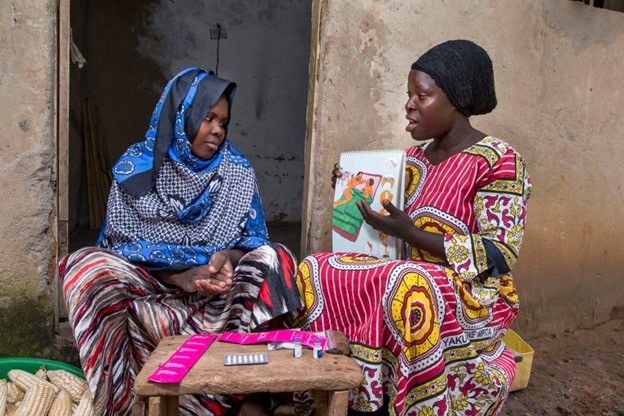
Universal Health Coverage: Not Without Family Planning
Universal health coverage (UHC) characterizes an ideal where all people have access to the health services they need, when and where they need them, without financial hardship. In the same way that the long-term consequences of the COVID-19 pandemic will place a heavy burden on health systems, so too will the lack of reproductive health care.