


The Impact of Knowledge Management Innovations to Improve Equitable and Effective Learning and Collaboration in Global Health Programs
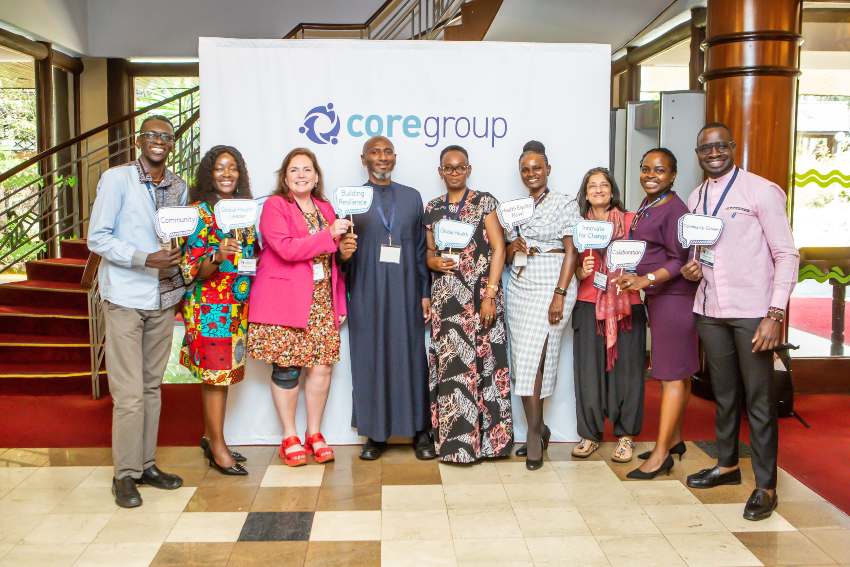
CORE Group’s Global Health Practitioners Conference (GHPC), held in October 2024 in Nairobi, Kenya, was focused on the theme Healthy Communities: Sustainable Environments. It aimed to bring stakeholders together to discuss equitable solutions for pressing health needs related to communities and climate, and how collaboration will improve health and enable quality programs. The Knowledge SUCCESS East Africa team showcased three of our project’s KM innovations, emphasizing how the project is supporting partners to collaborate and learn from each other to find solutions for health programming challenges.
Centering communities in global health programs
The Knowledge SUCCESS and Breakthrough ACTION projects collaborated on a concurrent session focused on the communities aspect of the conference. The session, titled “Prioritizing Community Insights to Strengthen Global Health Systems through Innovative Knowledge Management and Social and Behavior Change Approaches,” included presenters from both projects sharing approaches that center the experiences, knowledge, and preferences of the stakeholders and community members closest to the work.
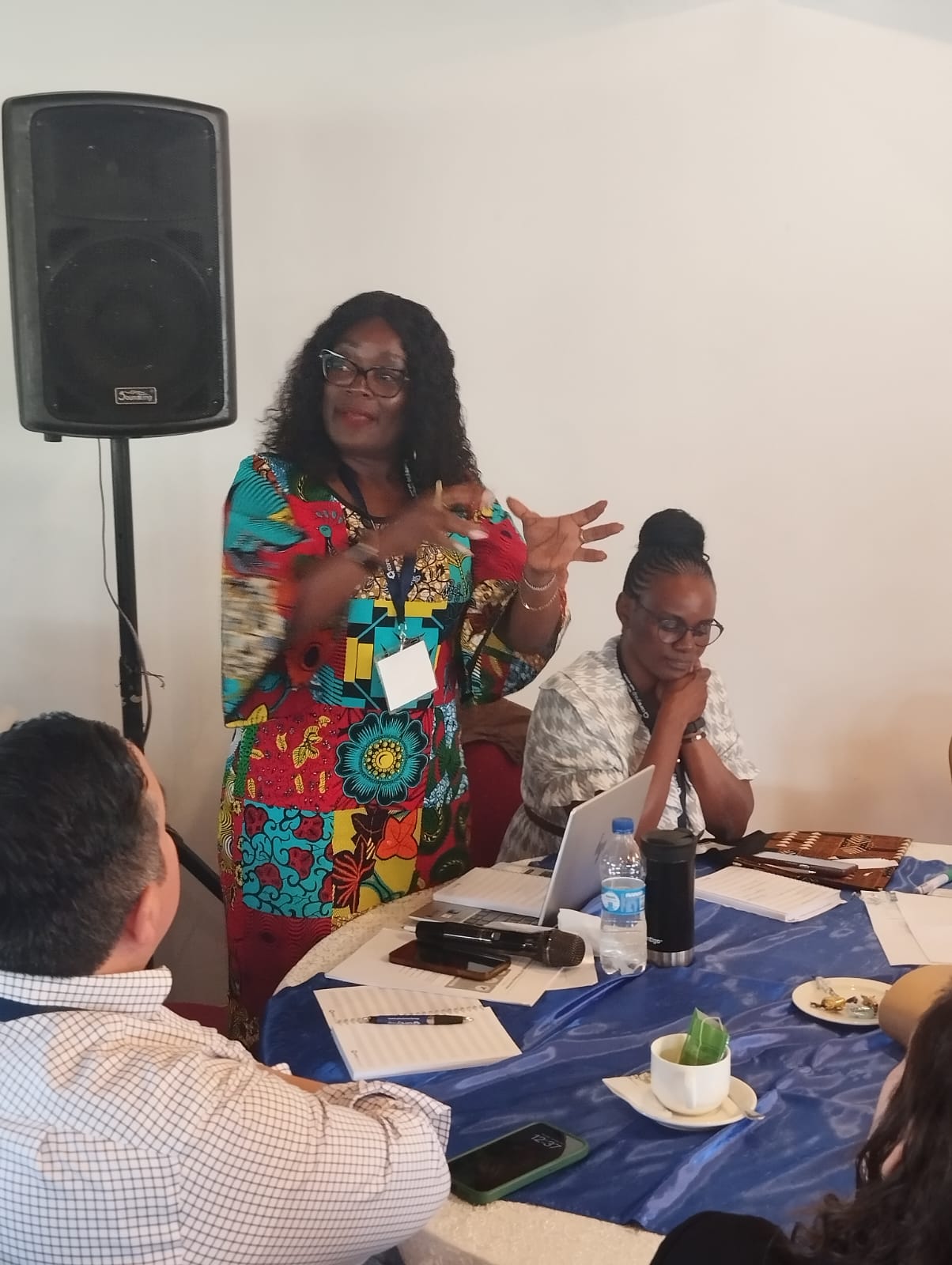
Grace Miheso presenting during the concurrent session at GHPC. Image Credit: Collins Otieno
Grace Miheso, the Chief of Party of Breakthrough ACTION Kenya with the Johns Hopkins Center for Communication Programs, spoke about the project’s use of the Community Action Cycle. This comprehensive approach to social and behavior change and community engagement addresses key determinants that influence the uptake of critical health services within a community and actively engages community members, leaders, and healthcare providers. The project collaborates with communities to prioritize their most pressing health issues and plan an effective community-based strategy to address them. This iterative process promotes a sense of ownership and meaningfully engages stakeholders to take an active role in improving their own health outcomes.
Irene Alenga, the Knowledge Management and Community Engagement Lead on the Knowledge SUCCESS East Africa portfolio with Amref Health Africa, presented findings from a series of peer-to-peer learning activities aimed at building collaboration and knowledge sharing among health and development professionals in sub-Saharan Africa and Asia, with the ultimate goal of strengthening health programs and systems. During these peer-to-peer learning activities, Knowledge SUCCESS brought together 125 professionals from 40 countries and took them through a thoughtful step-by-step process to identify the “how” and specific success factors from their programming. Participants also shared their challenges and gathered input on solutions from their peers who work on similar programs. The activities focused on two technical areas:1) integration and scale-up of community health workers into the health system and 2) reaching high-priority populations with COVID-19 vaccination. Through these activities, the project found that these professionals were discussing themes that related to equity, quality, and resource mobilization— all important aspects of health systems strengthening. Click below to see the challenges and solutions that these professionals discussed and shared with each other— demonstrating the power and impact of peer-to-peer learning and exchange.
Addressing challenges in health systems strengthening: Key lessons shared during peer-to-peer sessions
Building community trust
- Spend time mentoring community health workers to address biases, for example in providing family planning and reproductive health (FP/RH) services for youth.
- Select community health workers that live in the same community as they work, to ensure commonality and prevent language barriers.
- Host community dialogues to provide space to discuss health services and potential questions and barriers that community members have.
- Leverage community influencers to help build trust in health services and systems.
- Articulate the benefits of health services in messages sent to communities.
Strengthening motivation and continuation of health workers
- Integrate health workers into the national health system, rather than project-by-project.
- Better coordinate the work of community health workers so that their work is not split across so many different programs.
- Provide non-financial incentives as well—for example, public recognition by influential leaders.
- Pair community health workers together so one leaves, the other person can continue providing services within that community.
Collecting and reporting on data
- Provide adequate and ongoing opportunities for training on the use of data collection tools (do not assume proficiency in these areas).
- Facilitate data quality review meetings to address data gaps and/or integrate data tracking and monitoring into regular meetings.
- Carefully consider the type of information being collected and limit it to only the essential data.
Mobilizing resources
- Strengthen partnerships and collaboration among government, private sector, and NGO partners.
- Enhance public-private partnerships to support costs related to supply chain and stipends.
- Share and document program experiences and impact for advocacy purposes—for example, to help others get buy-in/investment for a community health program.

The peer-to-peer learning activities were facilitated through Learning Circles, a KM innovation that Knowledge SUCCESS developed through a co-creation exercise in 2020. Collins Otieno, the East Africa Family Planning/Reproductive Health Technical Officer on the Knowledge SUCCESS project at Amref Health Africa, presented the objectives and common agenda across all of our Learning Circles cohorts and shared specifically how the project has leveraged this approach with professionals and partners working in FP/RH in the East Africa region. Attendees also had the opportunity to explore both the Learning Circles and Community Action Cycle among each other during an interactive portion of the concurrent session. Participants in the session showed appreciation and expressed the value of learning about community-centered social and behavior change and KM approaches.
Delivering community-driven KM tools
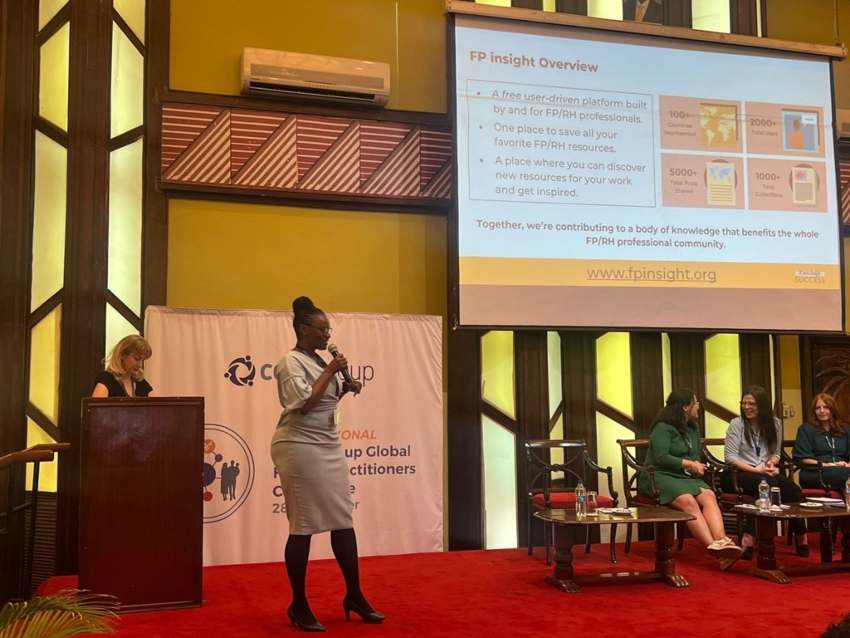
Knowledge SUCCESS showcased another KM innovation, FP insight, during the conference’s Appy Hour session. Through this interactive, exhibition-style session, we pitched how health and development professionals can use this platform in their daily work, and how it can be leveraged to save and organize resources during conferences. The platform addresses common KM challenges, helping professionals to find, save, and organize relevant FP/RH resources in a meaningful, accessible, and equitable way, including features that allow users to save and access resources offline, ensuring that professionals in low-bandwidth settings, can still participate. One common audience recommendation across this session was for presenters to consider sustainability of these platforms beyond the end of donor-sponsored projects. FP insight was built with the Principles of Digital Development to promote sustainability. For example, it was built with open source frameworks and designed for portability so that it can be easily transferred to a new owner if needed. In addition, FP insight users link out to resources that are hosted on external websites instead of uploading them to the FP insight platform, and users can also export their curated collections to a CSV (comma-separated values) file.
Improving collaboration through equitable processes
During the conference’s interactive, dynamic technical roundtables, Knowledge SUCCESS introduced participants to the concept of equitable KM—what it means, why it matters, and how to integrate equity into KM initiatives to improve collaboration and knowledge exchange across the global health workforce.
- The absence of unfair, avoidable, and remediable differences in knowledge creation, access, sharing, and use among groups of health workforce members
- Is achieved when everyone has the information, opportunities, skills, and resources needed to define and participate in the knowledge cycle
- How we create and share knowledge—and eventually decide how to use it—can affect individuals, families, communities, health systems, and policies.
- Paying close attention to equity in KM is important to ensure enhanced and equitable collaboration among health practitioners to share best practices and improve implementation that achieves health goals.
To support the health and development community in integrating equity into their KM processes and initiatives, Knowledge SUCCESS developed a guidance document and checklist in English and French. These tools raise awareness about potential inequities in KM and suggest how they can be addressed, as well as assess strengths and weaknesses in their KM initiative and identify how to achieve more equitable KM.
One of the closing day’s plenaries also highlighted the importance of equity across health systems. The session, titled Health Equity and System Strengthening for Primary Health Care: How to ensure equity is part of the systems approach to PHC and Community Health, featured Margaret Odera, a Community Health Champion at the Mathere Health Center in Nairobi. During her presentation she shared, “Health equity is achieved when everyone can reach their full potential for health and well-being. Outbreaks and pandemics begin and end at the community level, where community health workers play a critical role. If these workers are not included in strategic and high-level decision-making platforms or access useful information in the PHC Discourse, pandemics will continue to surge within communities. There needs to be equal representation of community health workers in these conversations.” She also connected this to how community health workers access and participate in knowledge translation.
There is an urgent need to improve health literacy among community health workers, offering them the same training and career advancement opportunities as other healthcare professionals, such as nurses and doctors. Without this support, we won’t be adequately prepared for the next pandemic.