


The Jeunes en Vigie Program
Program Background
Social auditing is a process that enables communities to evaluate and monitor the delivery of public services, ensuring transparency, accountability, and responsiveness from service providers. In the context of health, social auditing involves the systematic assessment of healthcare services by the very people who use them and identifying gaps, best practices, and challenges in care to advocate for improvements. The Jeunes en Vigie (Young Lookouts) program is a pioneering initiative that embodies a feminist approach to social auditing in sexual and reproductive health and rights (SRHR) services. This program empowers young women, ages 18-30, to conduct social audits through field surveys and peer interviews, actively engaging them in their communities.
Implemented across four districts in Burkina Faso (Koudougou, Réo, Koupéla, and Tenkodogo) and two districts in Senegal (Matam and Mbour), the Jeunes en Vigie program is managed by a consortium of organizations, led by Equipop in collaboration with the Burkinabe Council of Community Development Organizations (BURCASO) and SOS Jeunesses et Défis (SOS/JD) in Burkina Faso, along with ONG RAES and Jeunesse et Développement (JED) in Senegal. The project was funded by L’Initiative, a French mechanism that works with the Global Fund to accelerate the fight against major pandemics including HIV/AIDS, tuberculosis, and malaria.
Young girls and women in these regions face significant SRHR challenges. In Burkina Faso and Senegal, 75% of HIV infections among young people are among girls. Furthermore, by the age of 19, 57% of women in Burkina Faso and 34% in Senegal have already had a child, often limiting their ability to pursue higher education and professional development. These figures underscore the urgent need for targeted interventions that address the specific needs of this vulnerable population. Despite these challenges, the healthcare systems and programs in these regions often fail to meet the needs of young women and girls due to discriminatory attitudes held by providers, lack of investment in youth-responsive services, and other systemic barriers. The result is a significant gap in the availability and accessibility of quality SRHR services for young women.
The Jeunes en Vigie program aims to address these gaps by integrating a feminist and human rights perspective into its social audits. Although previous programs often failed to adequately address girls’ health issues by viewing them solely as “beneficiaries” or “users” rather than as “engaged citizens” or “empowered women,” the Jeunes en Vigie program seeks to change this narrative by recognizing these young women as central actors in advocating for their health rights. By engaging directly with the young women in these communities and training them as social auditors, the program strengthens their capacity to evaluate the accessibility and quality of their health services, giving them the platform to voice their needs and experiences.
Get to Know the Jeunes en Vigie Program Model
From 2020 to 2024, the Jeunes en Vigie program trained and supported 90 young auditors across six districts in Burkina Faso (Koudougou, Réo, Tenkodogo, Koupéla) and Senegal (Mbour, Matam). These auditors were equipped with knowledge and tools on SRHR, media communication, and social auditing techniques to evaluate health services related to SRHR, HIV, tuberculosis, and malaria—the most pressing health concerns in their communities.
From May to July 2022, the young auditors, with support from consortium organizations, conducted social audits to assess adolescents’ and young people’s access to family planning and SRH services and care for HIV, tuberculosis, and malaria. This community-driven process aimed to highlight the real needs of young people and advocate for better service quality and accessibility.
Principles of the Intervention
Youth Capacity Building
The program focused on enhancing the skills and knowledge of young people, empowering them to take action and participate in political processes. With guidance from feminists, focal points, and program teams, the young auditors developed the confidence and abilities to lead social audits and advocate for their communities.
Community Engagement
The auditors actively collected data on the availability and accessibility of health services, observing and documenting the experiences of youth and marginalized groups. They translated youth questionnaires into local languages to ensure surveys were accessible and captured all voices, organized focus groups discussions of youth in their region, and presented their audit findings to health authorities in the district, pushing for necessary changes to improve service delivery and accessibility.
Social and Political Mobilization
The program amplified the voices of young people, encouraging collective action to demand accountability from authorities. Through exchanges between providers, patients, and decision-makers, the program fostered dialogue, civic awareness, and the implementation of more youth-responsive care in health centers.
🔍 The Jeunes en Vigie Resource Toolkit: Global SRHR Guidelines In Action
The Jeunes en Vigie program used a feminist approach to healthcare democracy to empower young women in Burkina Faso and Senegal by training them to conduct social audits of SRHR services in their communities. Two primary WHO guidelines supported the implementation of the program’s framework:
- Global standards for quality health-care services for adolescents: Standards and criteria
- WHO recommendations on adolescent sexual and reproductive health and rights
For example, WHO’s Global Standards guide played a pivotal role in the social audits, enabling youth to hold healthcare systems, programs, and policies accountable by measuring them against global standards. These WHO guidelines provided the auditors with a critical benchmark to evaluate whether these systems effectively met the specific needs of young women and girls.
Social Auditing Process
The social audits were conducted using three key tools:
- Interview guide for young people
- Focus group guide for youth
- Interview guide for other community stakeholders, such as healthcare providers and religious leaders
These tools enabled auditors to gather data, conduct awareness-raising activities, and advocate for improved health services, emphasizing the importance of youth accessibility to services in terms of location, hours, and cost. For example in Senegal, the audit findings led to advocacy efforts that focused on getting district chief physicians to commit to offering tailored, accessible youth services, and the groups’ advocacy ultimately led to the creation and operation of safe and confidential youth spaces in local health facilities.
Monitoring and Evaluation
The program’s monitoring and evaluation (M&E) system was based on a change-oriented approach (COA) adopted by Equipop that emphasized qualitative assessments. The approach involved use of collaborative workshops, group meetings, and tools such as the “empowerment notebook,” where auditors documented their experiences, challenges, and learnings throughout the process. Testimonial sheets were also used to collect feedback from healthcare providers. This M&E framework helped the program team reflect on progress, adapt strategies, and strengthen the capacity of young auditors.
Unique Aspects of the Social Audit
The social audit approach is particularly innovative in that it provided practical insights into the real barriers to achieving universal health coverage (UHC), especially in hard-to-reach communities and among young people. By involving young women in these audits, the program ensured that they became active participants in their health, advocating for the changes needed to make health services more accessible, comprehensive, and responsive to their needs.
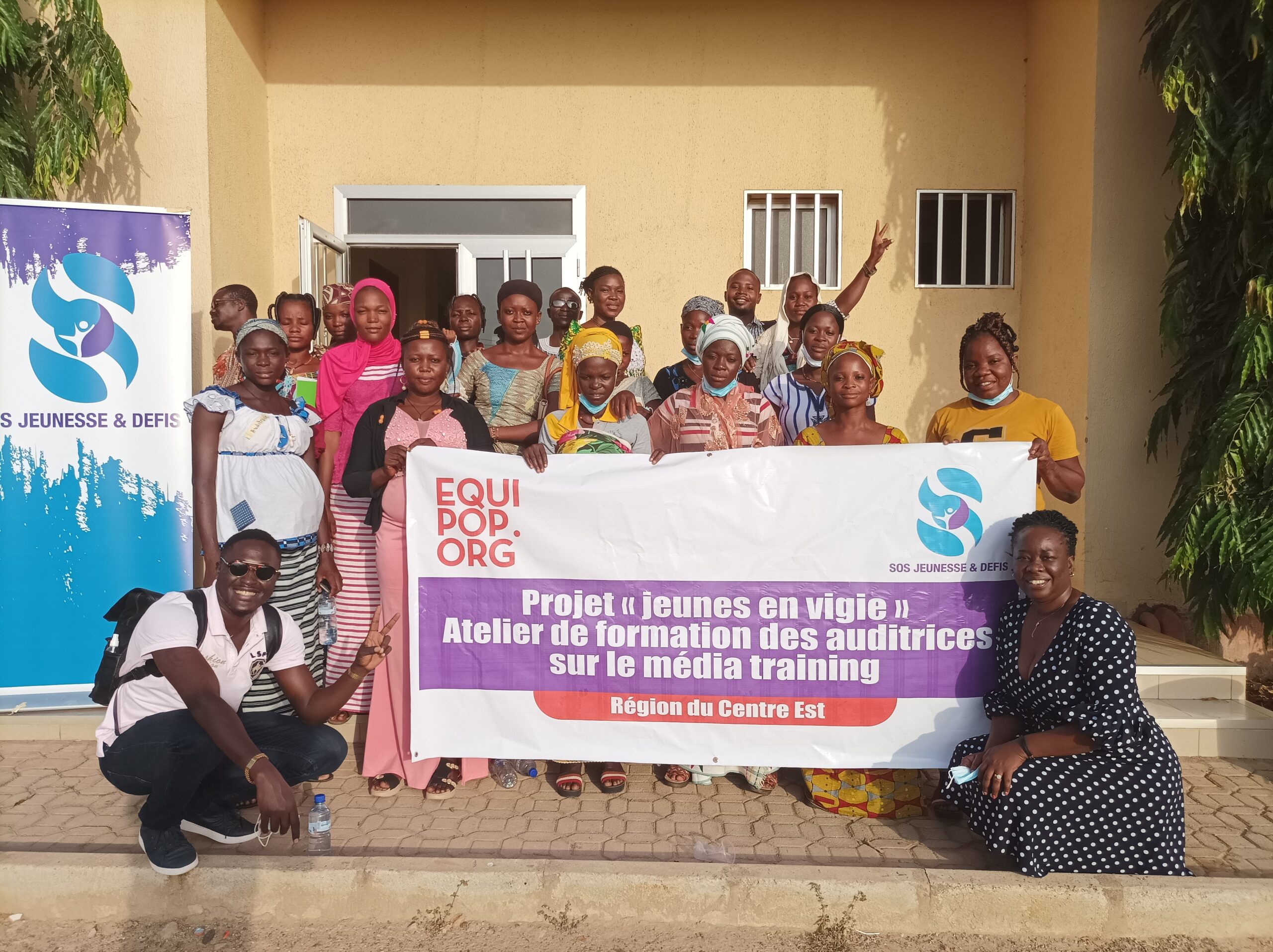
The preparatory phase of the social audits included two training sessions for auditors on key health information on SRHR, HIV, tuberculosis, and malaria, as well as on media skills. These sessions laid the groundwork for auditors to effectively implement activities in the field, and cemented their role as active change agents working to hold their health system accountable through participatory approaches.
A Tool for Healthcare Democracy
A guide was developed as part of this project, offering practical advice and concrete recommendations for organizations or activists looking to engage in a similar feminist program approach to strengthen citizen participation in assessing and holding their healthcare system accountable. This guide serves as a valuable resource for designing, implementing, and evaluating similar projects that focus on inclusive, feminist, and democratic principles in health systems and that aim to reduce health inequalities.
Program Impact
The impact of the Jeunes en Vigie program extends beyond health and intersects with broader community well-being. Through the intervention, the program not only facilitated youth-led social audits to help improve health outcomes but also equipped young people with vital skills in data collection, social and political mobilization, and advocacy, including engagement with high-level community and governmental leaders. By embedding a feminist health democracy approach, the program successfully repositioned young people at the core of health decision-making. This holistic approach has led to significant strides in several crucial areas, shaping the program’s success. These include enhancing individual and collective empowerment, fostering stronger collaborations for better health service delivery, advancing advocacy efforts and shifting social norms, as well as generating new knowledge products to further support young people’s health and well-being.
Strengthened Collaboration and Improved Service Delivery
The program enhanced collaboration between healthcare providers and young people. As Martine, a Jeunes en Vigie Focal Point from Mbour, Senegal, notes, “When providers recognize shortcomings and mistakes, we feel like we are starting from new grounds of trust and listening.” The program also improved healthcare providers’ capacity to offer quality information and care for adolescent girls and young women, helping to address and deconstruct certain misconceptions about sexual and reproductive health.
Advocacy and Social Norms
The program drove changes in social norms and policies, primarily at the local level, with ongoing efforts to extend advocacy to the national level. Social and political mobilization activities, including awareness-raising and engaging authorities, will require continued follow-up on the commitments made, with activists integrating the social-audit findings into their advocacy and political demands to ensure that girls’ and women’s voices are heard at the highest decision-making levels.
Knowledge Generation
The initiative produced valuable knowledge products and methodologies for enhancing youth care services, including three key deliverables that emerged from the project: an empowerment booklet, a guide on health democracy, and an experience-sharing video, further supporting the program’s impact and sustainability.
Empowerment and Capacity Building
The program empowered young social auditors by enhancing their communication and collaboration skills, enabling them to convey accurate, high-quality information to community members and to foster a collaborative team environment through active listening and meaningful dialogue. Additionally, auditors developed increased self-confidence and leadership abilities, demonstrating a stronger sense of responsibility and a sustained motivation to advocate for change, despite social pressures. These changes were observed during the various ‘change-oriented approach’ workshops organized throughout the project with the auditors and project teams. These workshops used several tools (e.g., the flower of empowerment framework and power relations mapping) to identify the ‘small steps’ of change achieved since the program’s start. As a result, the youth participants were placed at the center of the process to measure their own changes.
What’s more, it’s remarkable to note that several auditors have taken initiatives of their own outside the program, such as setting up associations, getting involved in a mosquito net distribution campaign, and organizing a conference on gender inclusion. In addition, participants in the program showed significant improvement in their knowledge of available services and sexual and reproductive health rights. Following the program, auditors spent time supporting several other fellow community members in accessing SRHR information and services and have taken active roles on local health committees, as well as initiated community projects related to reproductive health.
Addressing Common Barriers: Challenges and Effective Solutions
Lessons Learned
Engaging Young People at Every Stage
It is crucial for programs to truly engage young people, placing them at the center of the action. This approach empowers them as agents of change and reinforces their agency throughout every phase of the program.
Adopting a Holistic and Power-Conscious Approach
For effective community health projects, it is essential to use a holistic approach that addresses both the supply and demand for care. Equally important is questioning and deconstructing the power dynamics between providers and young people.
Sustaining Active Participation and Dialogue
Maintaining the active participation of young girls and fostering ongoing dialogue with providers and decision-makers is vital for the success and sustainability of the initiative.
Incorporating Reflective Practice
It is essential for the organization to engage in reflective work at every stage. This involves continuously assessing the role of young people within the program and understanding the power dynamics that are established among themselves, with providers, and with those managing the projects. The program team must also continually question its own practices to ensure the program remains responsive and equitable throughout its implementation.
Reflecting on the program’s impact, the Jeunes en Vigie team emphasized a crucial lesson for other civil society organizations aiming to implement impactful initiatives: “Prioritize a participatory, integrated, and inclusive approach that places young people at the center of all decisions and actions,” said Annick Laurence Koussoubé, Project Manager with SOS/JD, underscoring the vital role of youth engagement in every phase of the program. This strategy not only ensures the effectiveness of interventions but also guarantees long-term sustainability and positive impact on the health and well-being of young people. Koussoubé emphasized, “This is how we create lasting change.”