


Empathways: Improving the Relationship Between Healthcare Providers and Young People
A major barrier to young people’s access and use of family planning is mistrust. This new tool leads providers and young potential clients through a process that addresses this barrier by fostering empathy, creating opportunities to improve youth family planning service delivery.

Seven Lessons in Sustainability and Scalability for Digital Health Solutions
Recent updates to digital health case studies highlight ways programs have changed in the past decade, revealing insights on sustainability and scalability.

Family planning, reproductive health, and population census: How are they linked?
Have you ever wondered how, if at all, census and survey activities relate to family planning and reproductive health? They do, quite a bit. Census data helps countries make more informed decisions when distributing resources to their citizens. For family planning and reproductive health services, the accuracy of these data cannot be emphasized enough. We spoke
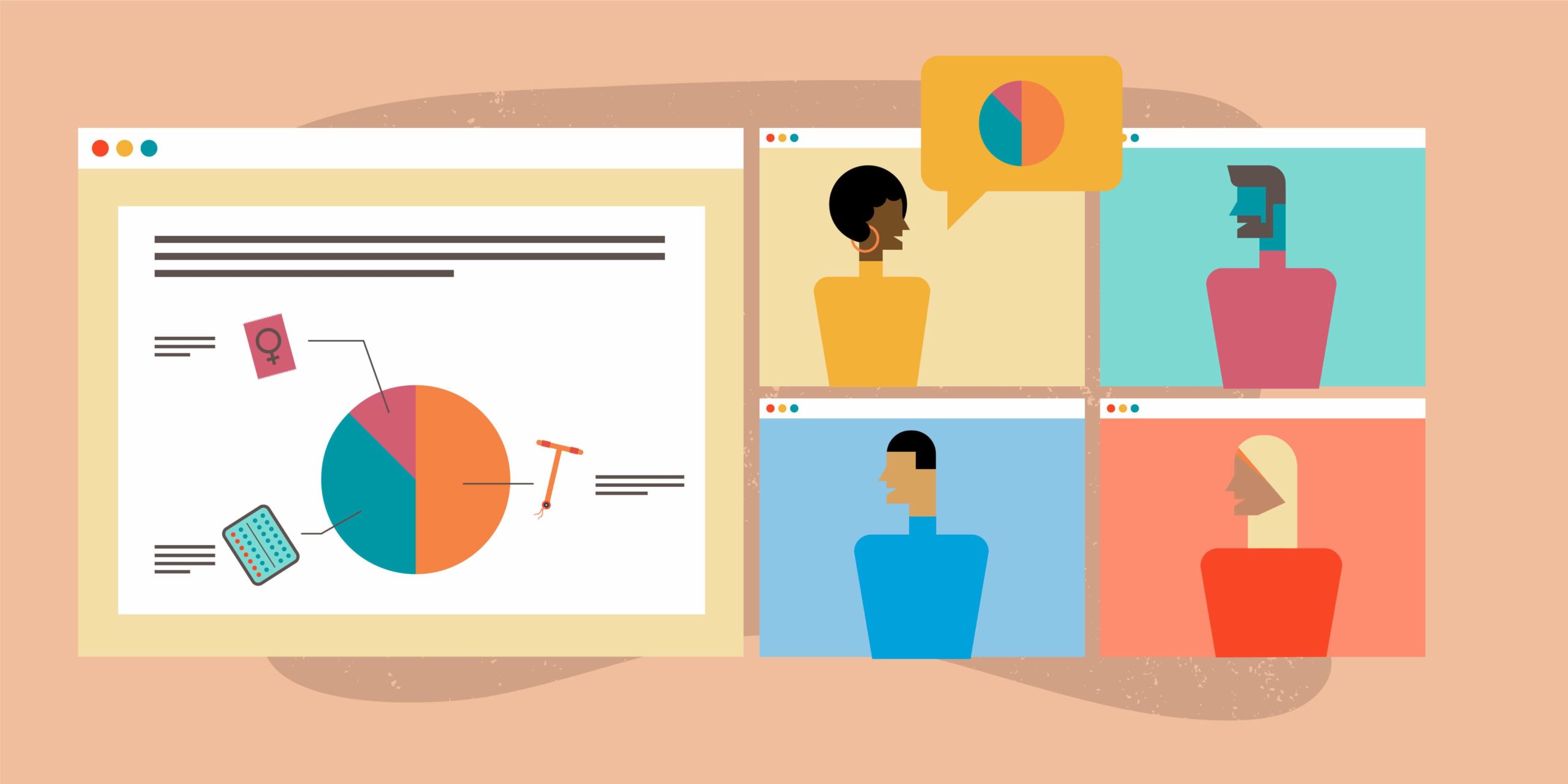
Data is key for robust evidence-based decision making
For robust evidence-based decision making, data and statistics are essential. To ensure proper planning in reproductive health, the accuracy and availability of this data cannot be over emphasized. We spoke to Samuel Dupre, a statistician with the U.S. Census Bureau’s International Program, and Mitali Sen, the International Program’s Chief of Technical Assistance and Capacity Building, who

Récapitulatif: Mise en œuvre d’une approche adaptée aux adolescents
Le 8 avril, Knowledge SUCCESS & FP2030 ont organisé la troisième session de la troisième série de conversations de la série Connecting Conversations, “ À quoi ressemble la mise en œuvre d'une approche adaptée aux adolescents ?” Cette session s'est concentrée sur les différences entre la mise en œuvre d'une approche systémique par rapport aux approches

Reflections on advances in DMPA-SC and self-injection
FHI 360’s Catherine Packer shares a personal perspective on DMPA-SC’s past ten years, from early research to recent workshops. Since its introduction—and particularly since it became available for self-injection—DMPA-SC has become an important part of the global family planning and reproductive health landscape.
Recap: Adapting to Meet Young People’s Needs as they Grow
On April 29th, Knowledge SUCCESS & Family Planning 2030 (FP2030) hosted the fourth and final session in the third set of conversations in the Connecting Conversations series, One Size Does Not Fit All: Reproductive Health Services Within the Greater Health System Must Respond to Young People’s Diverse Needs. This session focused on how health systems can

Vasectomy Advocacy: The time is now
Vasectomy is a safe and effective contraceptive method that offers benefits for individuals and heterosexual couples who know they do not want to have any—or any more—children. According to Breakthrough ACTION, a USAID-funded project that develops and tests new tools for social and behavior change in family planning and reproductive health, increasing access to vasectomy would

Addressing Cognitive Overload and Choice Overload
Maryam Yusuf, an Associate with Busara Center for Behavioral Economics, shares research on cognitive overload and choice overload, offers insights from co-creation workshops, and suggests considerations for sharing information without overwhelming audiences.

Investing in Social and Behavior Change: Understanding Costing
These days costing is top of mind for many working in family planning. To increase voluntary contraceptive use and reduce unmet need, how might you influence behaviors in a cost-effective manner, and what are the best ways to reach your target audiences? Breakthrough RESEARCH (BR), through work led by Avenir Health, is gathering, analyzing, and sharing