


Recap: Responding to the SRHR Needs of Indigenous Women and Girls
Earlier this year, Communities, Alliances & Networks (CAAN) and The World Health Organization’s (WHO) IBP Network partnered on a series of seven webinars on advancing the SRHR of Indigenous women living with HIV. Each webinar featured rich discussions, highlighting national plans and the status of Indigenous women living with HIV and other sexually transmitted infections in each country.

FP/RH Champion Spotlight: South-East Asia Youth Health Action Network (SYAN)
The South-East Asia Youth Health Action Network, or SYAN, is a WHO-SEARO-supported network that creates and strengthens the capacity of adolescent and youth groups in southeast Asian countries for effective advocacy and engagement in national adolescent health programs as well as regional and global policy dialogue platforms.

Inside the FP Story Podcast: Send Us Your Questions!
The next few episodes of the Inside the FP Story podcast will feature questions from listeners. We want to hear from you!
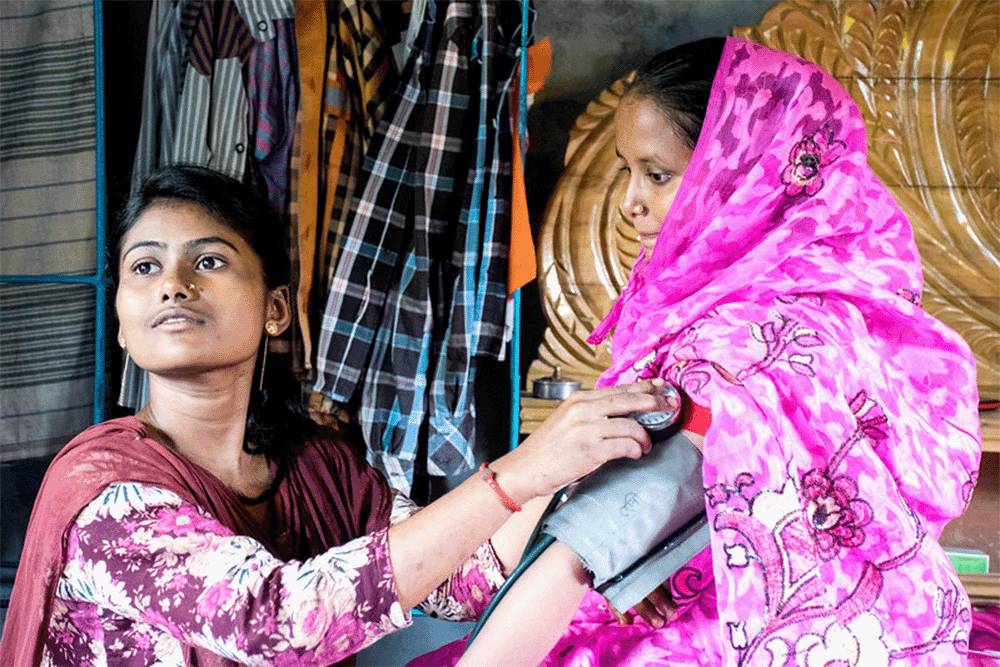
Premarital Family Planning and Reproductive Health Counseling in Bangladesh
Bangladesh has the highest rate of child marriage in Asia. Early marriage leads to a poorer quality of life for girls. It is detrimental to their agency and ability to obtain or continue education. So, in order to improve young couples’ quality of life and encourage them to make informed decisions, the Bangladesh Center for Communication
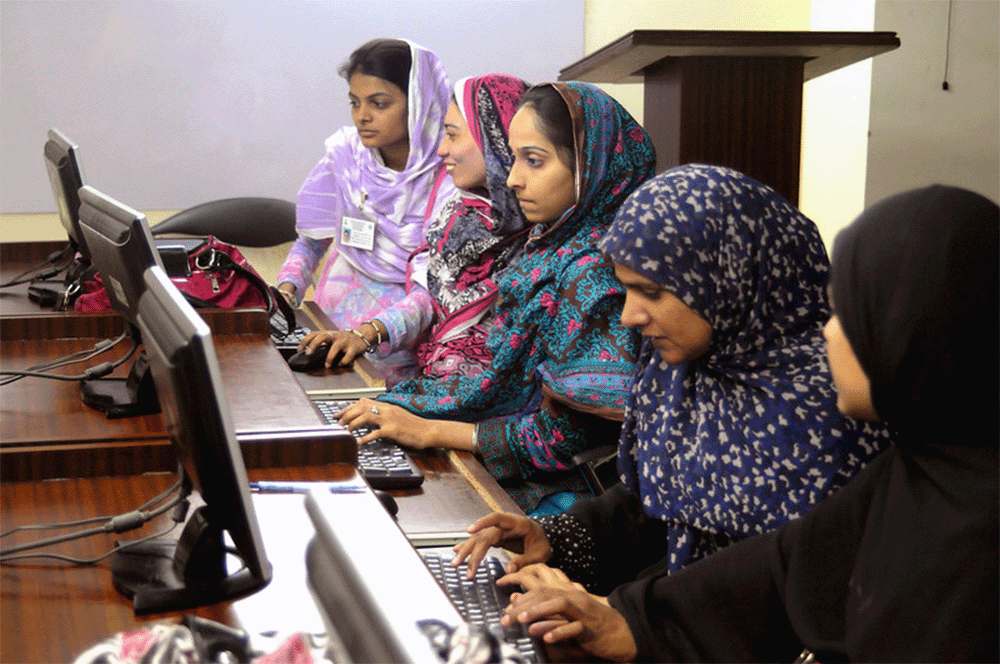
Early Adoption of AI in Family Planning Programs
Increasing investments in emerging technologies across low- and-middle income countries have created unprecedented opportunities to leverage digital innovations to enhance voluntary family planning programs. In particular, the use of artificial intelligence (AI) to gain new insights into family planning and optimize decision-making can have a lasting impact on programs, services, and users. Current advances in AI
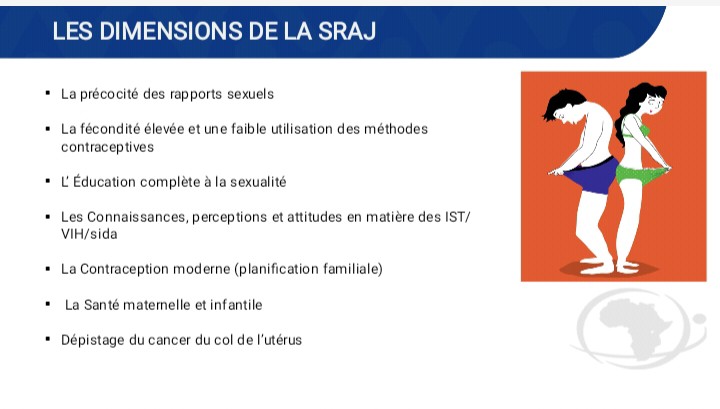
Une stratégie pour optimiser l’engagement des acteurs de la société civile du Partenariat de Ouagadougou
Depuis sa création, le Partenariat de Ouagadougou (PO) œuvre pour l’amélioration et la promotion de la santé reproductive et l’accès à l’information et aux services de planification familiale dans la sous région Ouest Africaine Francophone. Pour optimiser cette lutte, les Gouvernements, les donateurs du PO, et les partenaires de mise en œuvre locaux et internationaux se
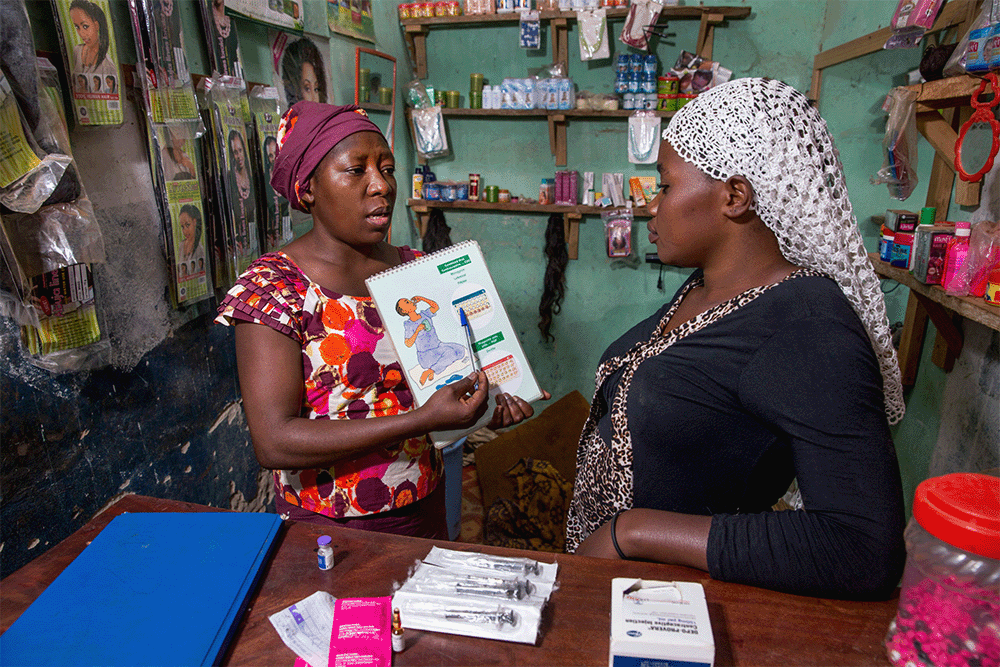
The Drug Shop Operators Handbook
In July 2021, USAID’s Research for Scalable Solutions (R4S) project, led by FHI 360, released the Drug Shop Operators' Provision of Injectable Contraception manual. The handbook shows how drug shop operators can coordinate with the public health system to safely provide an expanded method mix that includes injectables, as well as training for clients on self-injection.
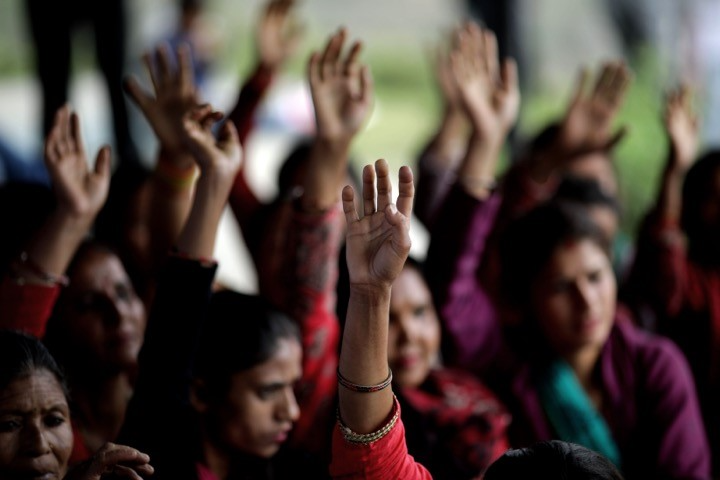
Family Planning Association Nepal Is Leaving No One Behind
Created in 1959, Family Planning Association Nepal (FPAN) is the country’s first national sexual and reproductive health service delivery and advocacy organization. Sixty-three years later, FPAN continues to ensure that family planning (FP) information and services are available and accessible to families—no matter their identity, ability, location, gender, or socioeconomic status.
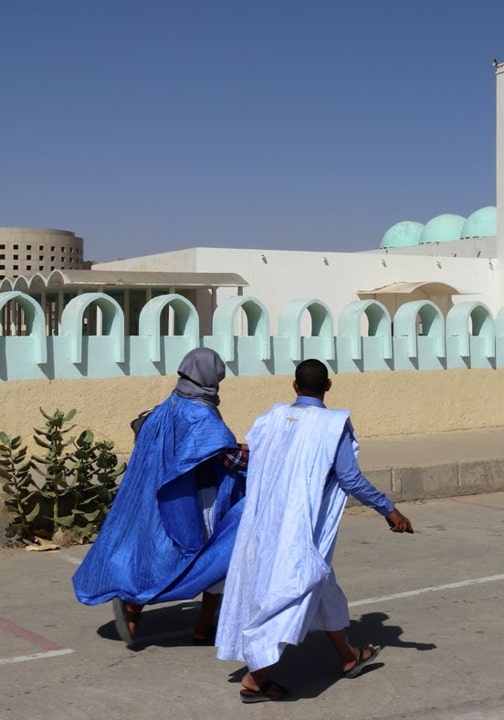
Religious Leaders: Allies for the Well-Being of Youth and Women
This webinar highlighted the role of religious leaders as important allies in promoting positive social norms for the reproductive health and well-being of young people and women, as well as the importance of partnerships and coalitions in building transformative community dialogue for positive change. It was jointly organized by the Passages Project (Institute for Reproductive Health,

Making Gloves, Forceps, and Other Supplies More Than an Afterthought
Massive improvements in our family planning (FP) supply chains in recent years have generated an expanded and more reliable method choice for women and girls around the world. But while we celebrate such success, one nagging issue that warrants attention is the corresponding equipment and consumable supplies, like gloves and forceps, necessary to administer these contraceptives: