


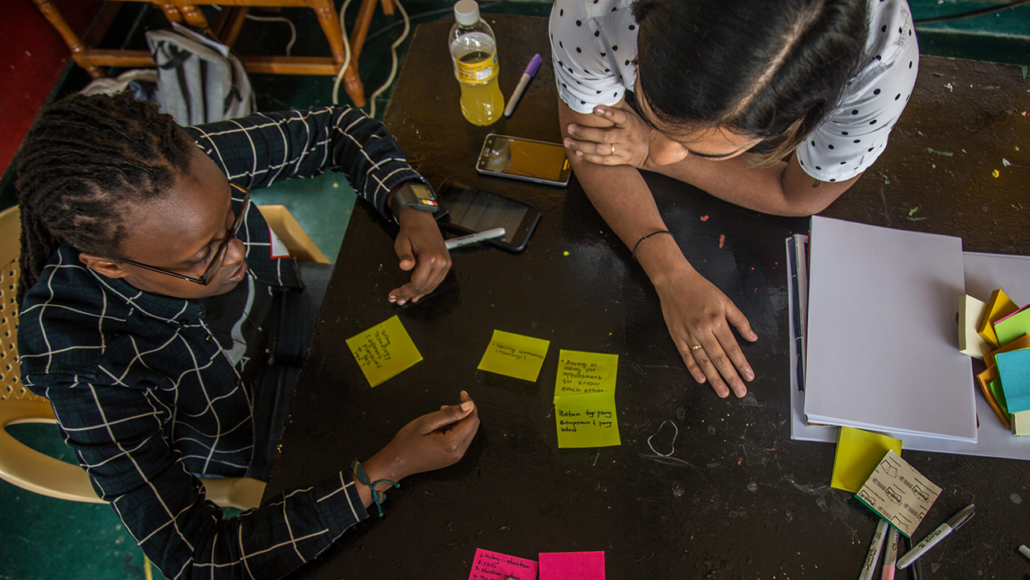
New Interactive Learning Courses to Strengthen Social and Behavior Change Measurement, Monitoring, and Evaluation for Family Planning Programs
Family planning programs are often faced with the challenge of transferring knowledge into behavior. A growing body of evidence suggests that social and behavior change (SBC) interventions improve family planning/reproductive health outcomes by directly increasing contraceptive uptake or increasing contraceptive use through pathways that address intermediate determinants such as attitudes around family planning.

Strengthening Research Skills: Evidence-based FP and Resilience in Afghanistan
Introducing our new blog series that highlights local research produced with support from the D4I project, 'Going Local: Strengthening Local Capacity in General Local Data to Solve Local FP/RH Development Challenges.'

June 2023 Course: Knowledge Management in Global Health Programs
Now through May 26, registration is open to enroll in the Johns Hopkins Bloomberg School of Public Health (BSPH) Summer Institute course, “Register by May 26th for this course. You may find this course listed under its course number 410.664.79.

FP UHC Blog Series: Ensuring Equitable Access to Family Planning in India’s Health Care System
Adapted from the soon to be published article “How Enhanced Engagement with The Private Sector Can Expand Access to Family Planning and Bring the World Closer to Universal Health Coverage” developed by Adam Lewis and FP2030.

Inside the FP Story Podcast: Fifth Season Launches
Season 5 of Inside the FP Story highlights the importance of using an intersectional approach in family planning and sexual and reproductive health programs.

10 Years, 10 Lessons: Implementing the Reproductive Health Law in the Philippines
Reproductive health advocates in the Philippines faced a tough 14-year long battle to turn the Responsible Parenthood and Reproductive Health Act of 2012 into a landmark law in December 2012.

Ten Lessons From Breakthrough ACTION’s Social and Behavior Change for Family Planning and Reproductive Health Programs
Over the last four years, Breakthrough ACTION has completed a wide array of activities utilizing social and behavior change (SBC) approaches to improve family planning and reproductive health (FP/RH) outcomes, including both global and regional advocacy, technical assistance, and capacity strengthening, as well as country-level implementation of SBC campaigns and solutions.

Finding the Nexus Between Family Planning and Universal Health Coverage
A version of this blog post originally appeared on FP2030’s website. Knowledge SUCCESS partnered with FP2030, Management Sciences for Health, and PAI on a related policy paper outlining the intersectionality between family planning (FP) and universal health coverage (UHC). The policy paper reflects learnings from a 3-part dialogue series on FP and UHC, hosted by Knowledge

Tools for Better SBC in FP/RH Programming
Breakthrough ACTION, along with Springboard and the Ouagadougou Partnership Coordination Unit, hosted a virtual share fair to promote FP/RH programming tools.

Using HIP Products to Inform and Strengthen FP Programs, Part 2
High Impact Practices in Family Planning (HIPs) are a set of evidence-based family planning practices vetted by experts against specific criteria and documented in an easy-to-use format. The Evaluation of High Impact Practices in Family Planning Products sought to understand whether and how HIP products were being used among health professionals at the country and global